
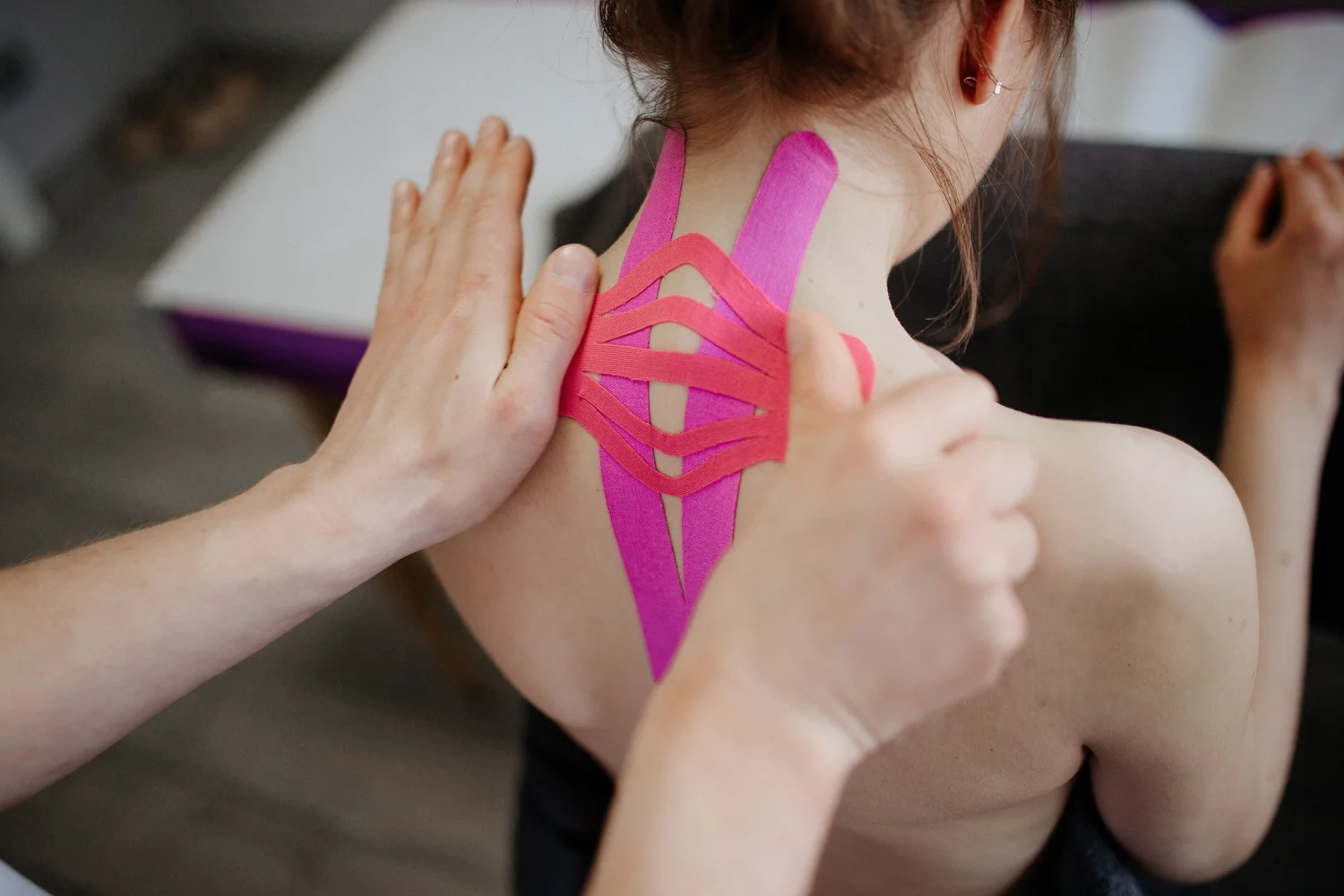
Whether you’re an athlete recovering from an injury, an office worker managing muscle tension, or someone looking to stay active despite chronic discomfort, kinesiology taping therapy has become a valuable tool in modern rehabilitation. At Control Physical Therapy, this technique is incorporated as part of individualized rehabilitation programs designed to support safe, functional movement. While colorful therapeutic tape is now a familiar sight on professional athletes and fitness enthusiasts, its benefits extend well beyond the sports world.
When incorporated into a comprehensive rehabilitation program, kinesiology taping therapy may help support muscles and joints, improve movement patterns, reduce discomfort, and encourage functional recovery. Rather than replacing traditional physical therapy techniques, taping works alongside therapeutic exercise, manual therapy, and patient education to support better outcomes.
What Is Kinesiology Taping Therapy?
Kinesiology taping therapy involves applying a specially designed elastic therapeutic tape to targeted areas of the body. Unlike rigid athletic tape that restricts movement, kinesiology tape stretches with the skin, allowing individuals to move naturally while providing gentle support.
The tape is carefully positioned based on the individual’s condition, movement patterns, and treatment goals. Certified physical therapists evaluate posture, muscle activation, joint mechanics, and functional limitations before deciding where and how to apply the tape.
Because each person’s body responds differently, successful taping relies on clinical assessment rather than simply applying tape to an area of discomfort.
How Kinesiology Tape Works
Although research continues to examine the exact physiological mechanisms, several widely accepted theories explain how kinesiology taping may contribute to rehabilitation.
Potential benefits include:
- Gentle support for muscles without restricting normal motion
- Improved awareness of body position during movement (proprioception)
- Reduced stress on irritated tissues
- Better movement mechanics during daily activities
- Assistance with posture correction
- Temporary reduction of swelling through improved lymphatic flow
- Increased confidence while returning to activity
The effectiveness of taping often depends on proper evaluation, accurate application, and combining it with evidence-based rehabilitation exercises.
Common Conditions That May Benefit
Kinesiology taping is used across many orthopedic, sports medicine, and rehabilitation settings. While it is not a cure, it may provide meaningful support throughout recovery.
Some commonly treated conditions include:
Sports Injuries
Athletes frequently receive taping for:
- Muscle strains
- Ligament sprains
- Shoulder instability
- Knee discomfort
- Achilles tendon irritation
- Shin splints
- Tennis elbow
- Golfer’s elbow
Because the tape allows full range of motion, many athletes can continue participating in rehabilitation-focused training while receiving additional support.
Neck and Shoulder Pain
Extended computer use often contributes to muscle fatigue, rounded shoulders, and neck discomfort.
Therapeutic taping may help:
- Encourage improved posture
- Reduce muscle overuse
- Support fatigued muscles
- Increase movement awareness throughout the workday
Combined with ergonomic improvements and strengthening exercises, taping may become part of a broader treatment strategy.
Back Pain
Low back discomfort affects millions of adults each year.
Physical therapists may use kinesiology tape to:
- Support lumbar muscles
- Improve posture awareness
- Encourage healthier movement patterns
- Complement stabilization exercises
While tape alone does not resolve back pain, it may assist individuals during active rehabilitation.
Knee Problems
Knee pain may develop from:
- Patellofemoral pain syndrome
- Overuse injuries
- Ligament sprains
- Muscle imbalances
- Post-surgical rehabilitation
Taping techniques can provide temporary support while strengthening surrounding muscles and restoring normal mechanics.
Plantar Fasciitis
Heel pain often limits walking, running, and standing.
Proper taping techniques may:
- Reduce stress on the plantar fascia
- Improve foot mechanics
- Support the arch
- Increase comfort during daily activities
Footwear recommendations and stretching programs remain important components of treatment.
The Importance of Proper Assessment
One of the biggest misconceptions is that everyone with the same diagnosis should receive identical tape placement.
In reality, treatment depends on multiple factors, including:
- Medical history
- Injury stage
- Muscle strength
- Joint mobility
- Functional goals
- Activity level
- Movement analysis
Two individuals with shoulder pain, for example, may require completely different taping techniques because their underlying movement impairments differ.
Comprehensive assessment helps ensure taping supports, not masks, the root cause of dysfunction.
Kinesiology Taping Is Not Just for Athletes
Professional athletes have certainly increased public awareness of kinesiology tape, but many everyday individuals also benefit from its use.
Physical therapists commonly apply tape for:
- Office professionals
- Healthcare workers
- Teachers
- Construction workers
- Older adults
- Parents lifting young children
- Recreational exercisers
- Individuals recovering after surgery
Because the tape remains flexible, many people can continue normal daily activities while receiving gentle therapeutic support.
Benefits Beyond Pain Relief
Although reducing discomfort is often one goal, kinesiology taping offers additional functional advantages.
Improved Movement Confidence
Pain frequently causes individuals to alter normal movement patterns.
Taping may provide gentle sensory feedback that encourages more natural movement during walking, reaching, lifting, or exercise.
Better Body Awareness
Proprioception refers to the body’s awareness of position and movement.
The tape stimulates receptors in the skin, helping individuals become more conscious of posture and movement quality throughout the day.
Support During Rehabilitation
As strength gradually improves, taping can serve as temporary assistance while patients develop greater muscular control.
This may be particularly valuable when returning to:
- Exercise
- Sports
- Occupational duties
- Recreational activities
Why Exercise Still Matters
An important point often overlooked is that kinesiology taping should rarely be the entire treatment plan.
Successful rehabilitation typically combines multiple evidence-based interventions, including:
- Therapeutic exercise
- Manual therapy
- Movement retraining
- Balance training
- Flexibility improvement
- Strength development
- Patient education
- Activity modification
Tape acts as a supportive tool while the body develops long-term improvements through movement and exercise.
Understanding Different Taping Techniques
There is no single taping method suitable for every condition.
Depending on clinical findings, physical therapists may use different applications to:
- Facilitate muscle activation
- Reduce muscle overactivity
- Support injured ligaments
- Improve joint positioning
- Promote lymphatic drainage
- Reduce swelling
- Encourage posture correction
Proper tension, tape direction, anchor placement, and skin preparation all influence the effectiveness of treatment.
Is Kinesiology Tape Safe?
For most individuals, kinesiology tape is well tolerated when applied correctly.
However, it may not be appropriate for everyone.
Physical therapists typically screen for:
- Skin allergies
- Open wounds
- Active infections
- Deep vein thrombosis
- Fragile skin
- Certain circulatory conditions
Patients should also monitor for skin irritation and remove the tape if itching, burning, or redness develops.
Professional guidance helps minimize potential complications.
Maximizing the Benefits of Taping
Patients can improve their overall rehabilitation experience by following several best practices.
Stay Active
Unless instructed otherwise, continue performing prescribed rehabilitation exercises while wearing the tape.
Follow Removal Instructions
Removing tape slowly, preferably after showering or using oil to loosen the adhesive, helps protect the skin.
Monitor Skin Health
Check for excessive redness, blistering, or irritation.
Communicate With Your Therapist
If symptoms change, improve, or worsen, treatment plans including taping strategies should be adjusted accordingly.
Common Myths About Kinesiology Taping Therapy
Myth 1: Tape Heals Injuries by Itself
Tape supports rehabilitation but does not repair injured tissues independently.
Myth 2: More Tape Means Better Results
Applying excessive tape or unnecessary layers does not automatically improve outcomes.
Myth 3: Anyone Can Apply It Effectively
While many instructional videos exist online, effective application depends on clinical reasoning, anatomical knowledge, and individual assessment.
Myth 4: It Only Helps Elite Athletes
People of all ages and activity levels may benefit when taping is appropriately incorporated into rehabilitation.
Integrating Taping Into a Long-Term Recovery Plan
Recovery is rarely achieved through one technique alone. Sustainable improvements come from identifying the underlying causes of pain or movement limitations and addressing them with a personalized treatment strategy.
For example, an individual experiencing recurrent shoulder discomfort may benefit from temporary taping while simultaneously improving posture, strengthening the rotator cuff, increasing thoracic mobility, and modifying repetitive workplace tasks. Similarly, someone recovering from a knee injury may use tape as they gradually rebuild strength, improve balance, and restore confidence during everyday activities.
By viewing taping as one component of a comprehensive rehabilitation program, patients are better positioned to achieve meaningful, long-lasting improvements rather than relying on temporary symptom management.
Choosing Professional Guidance
Because taping techniques vary significantly depending on diagnosis, movement quality, and rehabilitation goals, working with a licensed physical therapist provides several advantages.
A qualified clinician can:
- Perform a detailed movement assessment
- Identify the underlying contributors to pain or dysfunction
- Select the most appropriate taping technique
- Monitor progress over time
- Modify treatment as recovery advances
- Integrate taping with evidence-based therapeutic interventions
This individualized approach helps ensure that treatment aligns with each person’s unique needs rather than applying a one-size-fits-all solution.
Final Thoughts
Kinesiology taping therapy continues to play an important role in modern physical rehabilitation by supporting movement, improving body awareness, and complementing individualized treatment plans. While the tape itself is not a cure for injury or pain, it can provide meaningful support when combined with therapeutic exercise, education, and skilled clinical care.
At Control Physical Therapy, individualized rehabilitation remains the foundation of effective treatment. By combining comprehensive assessment, evidence-based physical therapy techniques, and appropriate supportive interventions such as kinesiology taping, patients can work toward improved mobility, greater confidence, and a safer return to the activities that matter most.